Evidence pages for safer downloader decisions
Methodology pages document what was tested, what is unsupported, and which fields should be recorded before making product claims.

M3U8 / HLS parser test methodology
Test permitted HLS manifests by recording playlist structure, variants, tracks, segment access, expiration, encryption, and refusal conditions.
An M3U8/HLS parser test should use a public, owned, or explicitly permitted manifest and record whether it is a master or media playlist, which variants and tracks are exposed, whether segments remain accessible, and whether encryption, DRM, credentials, or expiration require a refusal.
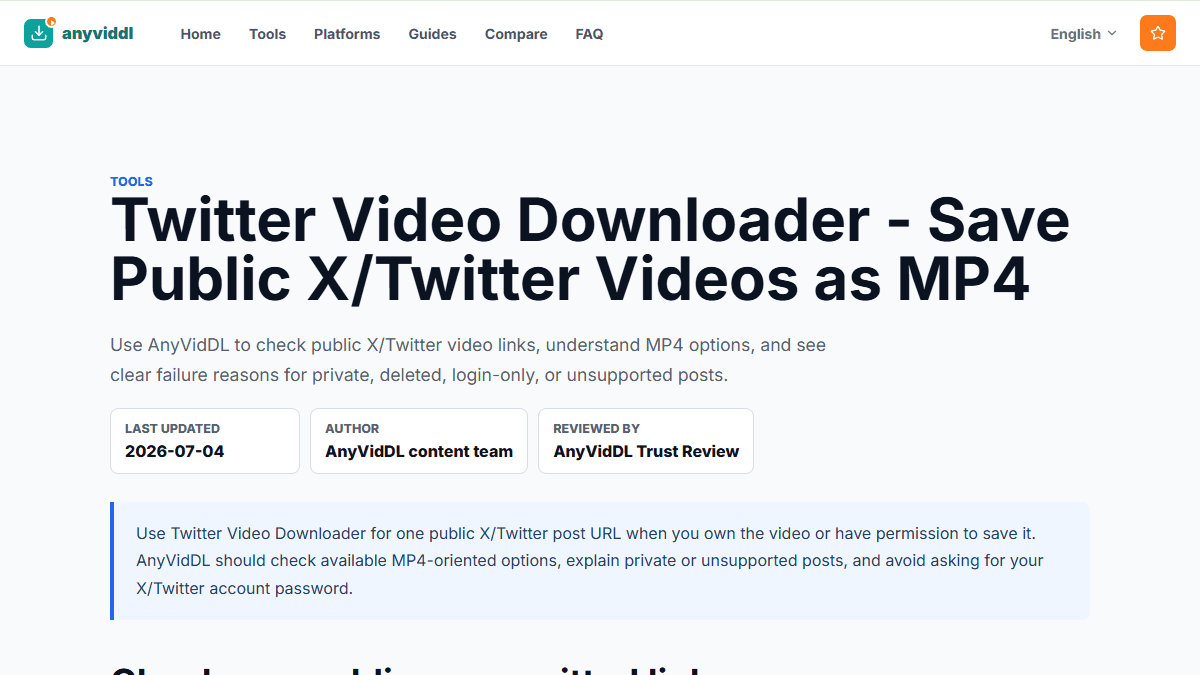
X/Twitter video download test methodology
A reproducible method for testing permitted public X/Twitter video URLs without turning one result into a universal support claim.
Test X/Twitter video handling with a dated set of public, permitted post URLs. Record the URL shape, logged-out availability, deployment, requested output, observed formats, result, and exact failure reason; report findings only for the tested conditions.
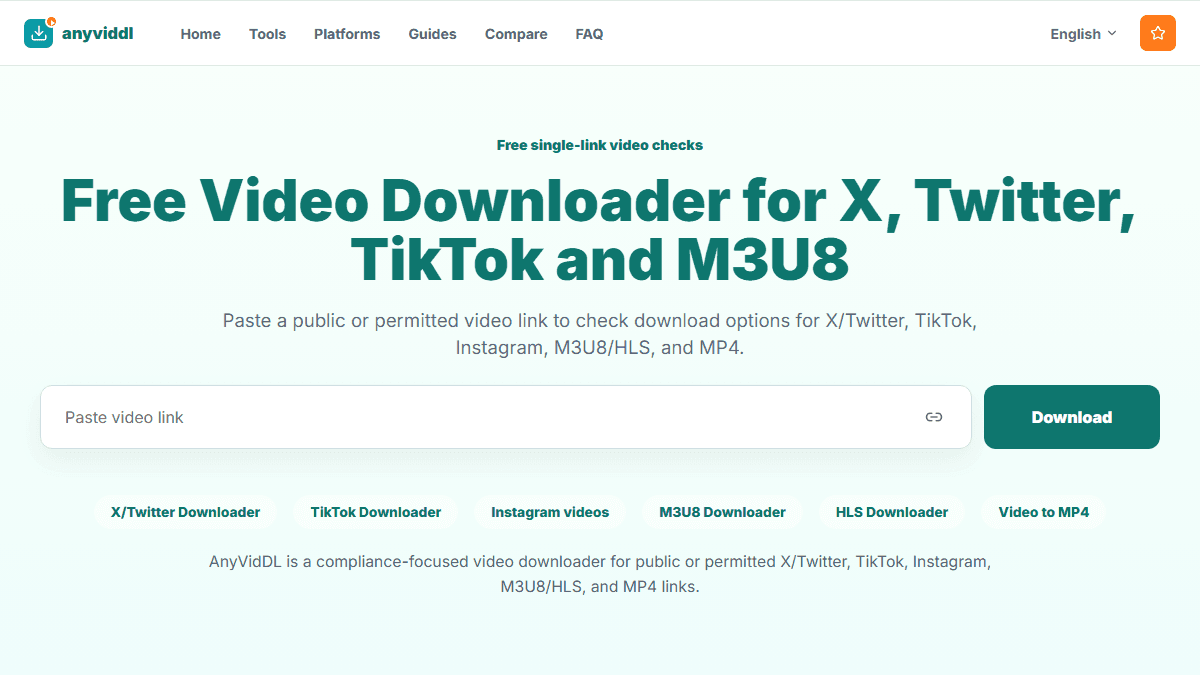
Privacy and Data Retention Methodology
How AnyVidDL should document data collection, retention, and credential boundaries.
A privacy methodology should separate one-link web parsing from extension, Pro, API, and MCP workflows. Each workflow needs clear statements about submitted URLs, temporary task data, logs, API keys, and what AnyVidDL should not collect.
Video Download Failure Reason Taxonomy
A standard failure vocabulary for download pages, queues, API responses, and support docs.
A useful failure taxonomy tells the user whether the problem is permissions, availability, platform change, unsupported format, queue limits, or a safety refusal. It should not collapse every issue into a generic failed message.